Craft Tool Organization: Keep Everyday Tools Within Reach
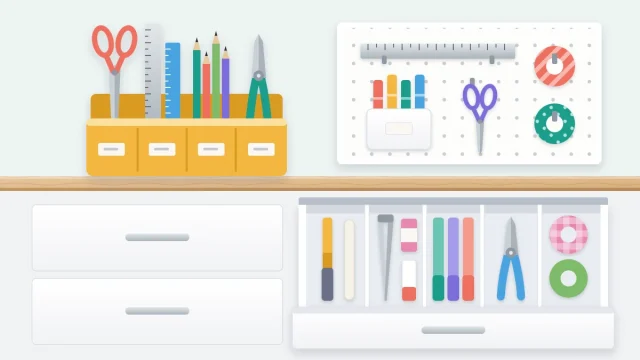
Stop hunting for scissors and rulers. Sort craft tools by how often you use them, give each one a single obvious home in a caddy, drawer, wall panel or labeled box, and keep cords in one bin.
Smart Storage Ideas for Creative Spaces
30 tutorials published
Stop hunting for scissors and rulers. Sort craft tools by how often you use them, give each one a single obvious home in a caddy, drawer, wall panel or labeled box, and keep cords in one bin.
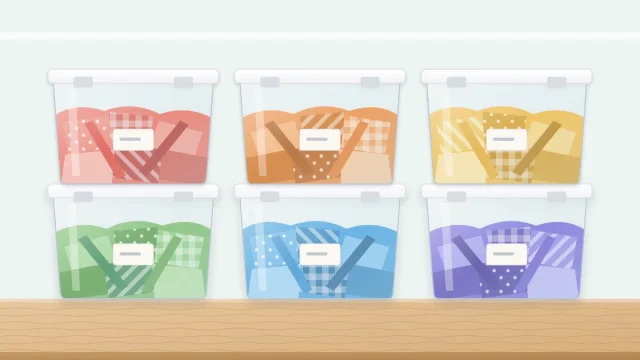
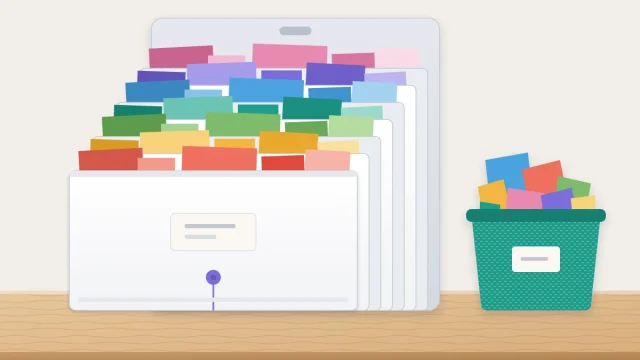
Set a size rule for which paper offcuts are kept, then file them by color, by size or trimmed to standard card dimensions. Includes a desk bin routine and what to do with scraps that fail the rule.
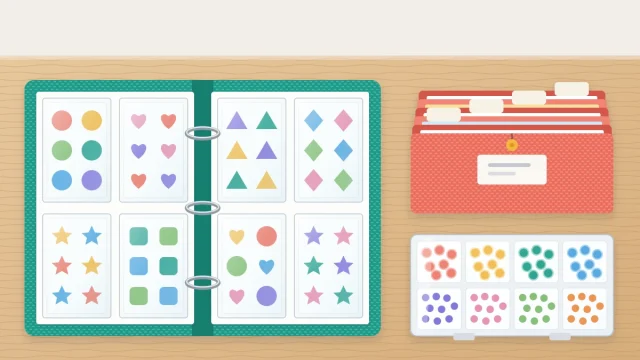
Give sticker sheets, die cuts, tiny embellishments and metal dies the container each one needs: pocket pages or an accordion file, envelopes in a case, lidded compartment boxes and magnetic sheets in sleeves.
Sort cardstock by sheet size first and color second, with neutrals, whites and specialty finishes at the end. Includes divider choices, a swatch ring for picking shades, and a home for card bases and envelopes.
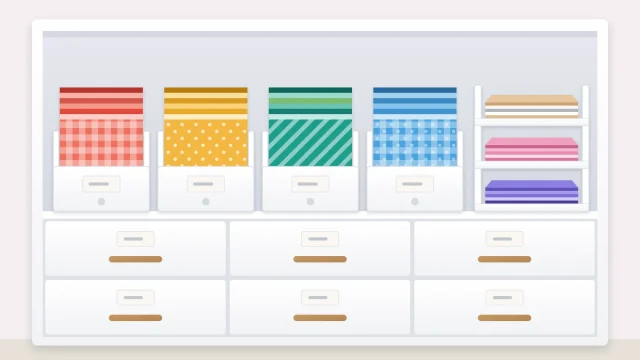
Five ways to store 12 x 12 paper compared: upright holders, flat trays, hanging folders, shallow drawers and zip portfolios. Plus how to sort sheets, handle pads and stop paper from sagging.
Set a minimum scrap size, choose between a size system and a color system, and keep a small catch bin by the cutting mat. Includes bin limits and what to do with the overflow.
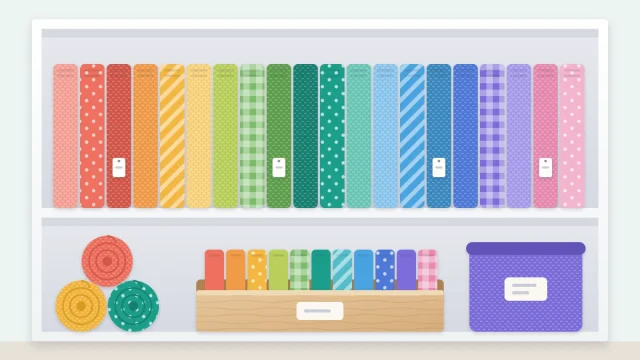
Replace deep fabric piles with uniform folds filed upright like books. Covers sorting by type and color, folding around a board or ruler, handling fat quarters and large cuts, and tagging yardage.
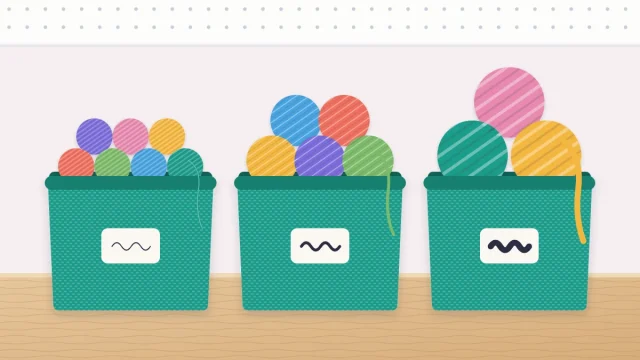
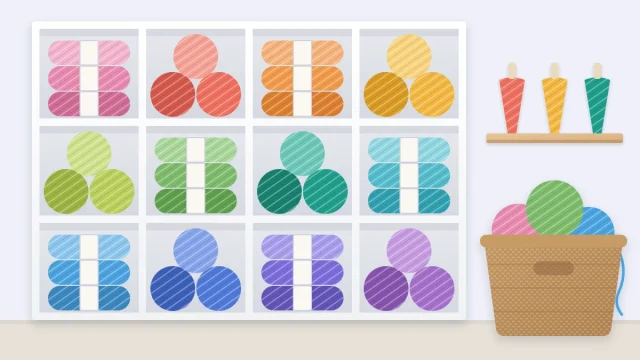
A step-by-step sorting session for a yarn stash: group by weight first, then fiber or color, keep ball bands attached, bag partial skeins and set up a short inventory you can check before you buy.
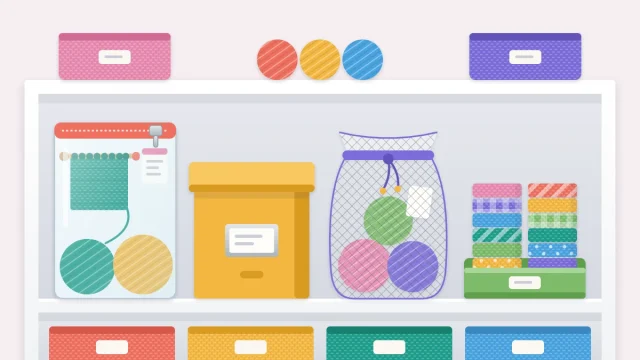
Eight ways to store yarn, from cube shelves and clear bins to a hanging closet organizer and zip bags for partial skeins, with what each one suits and how to choose between open display and closed storage.
Give every unfinished project its own container holding the piece, its supplies, the pattern and a card saying where you stopped. Add a fixed parking spot with a limit and a monthly finish, pause or release review.
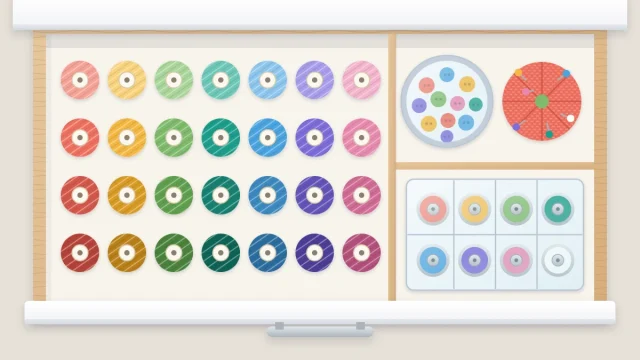
Sort a tangled sewing box into five families of notions, then give each the container that suits it: thread by color with bobbins beside the spools, zippers by length, buttons in jars, pins and needles in closed cases.
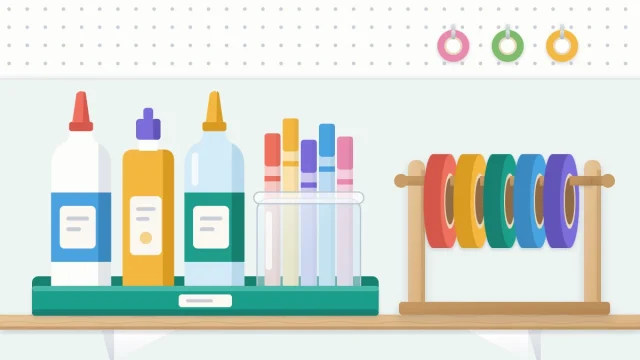
Group adhesives into six kinds and give each a fixed place: bottles upright in a drip tray, glue sticks in a jar, tape on a dowel, the cooled glue gun in its own bin, and strong products stored as their labels direct.